
Former names
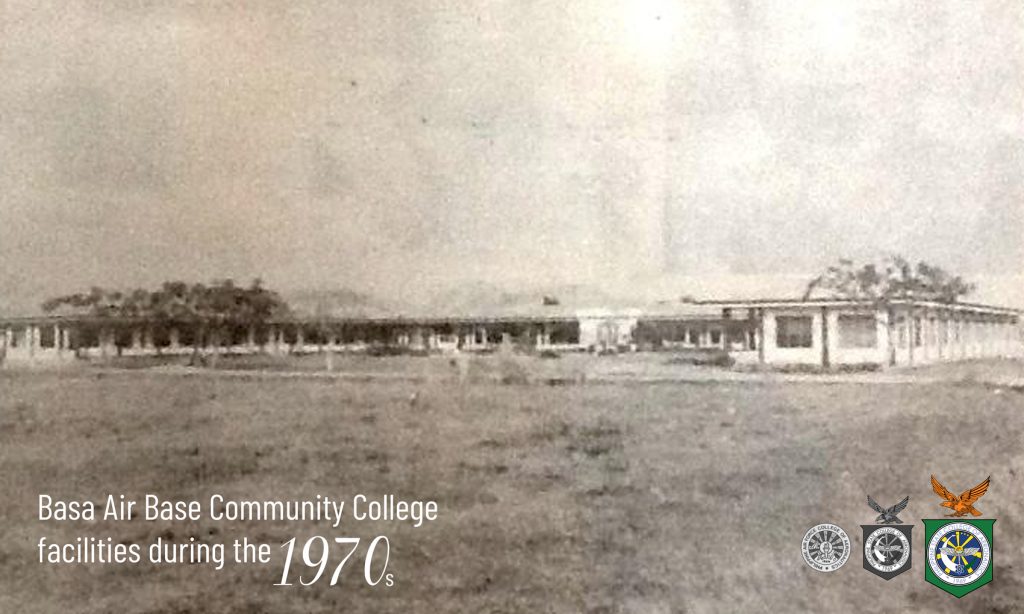
- Basa Air Base Community College (June 1969 to January 26, 1977)
- Philippine Air Force College of Aeronautics (January 26, 1977 to June 3, 1992)
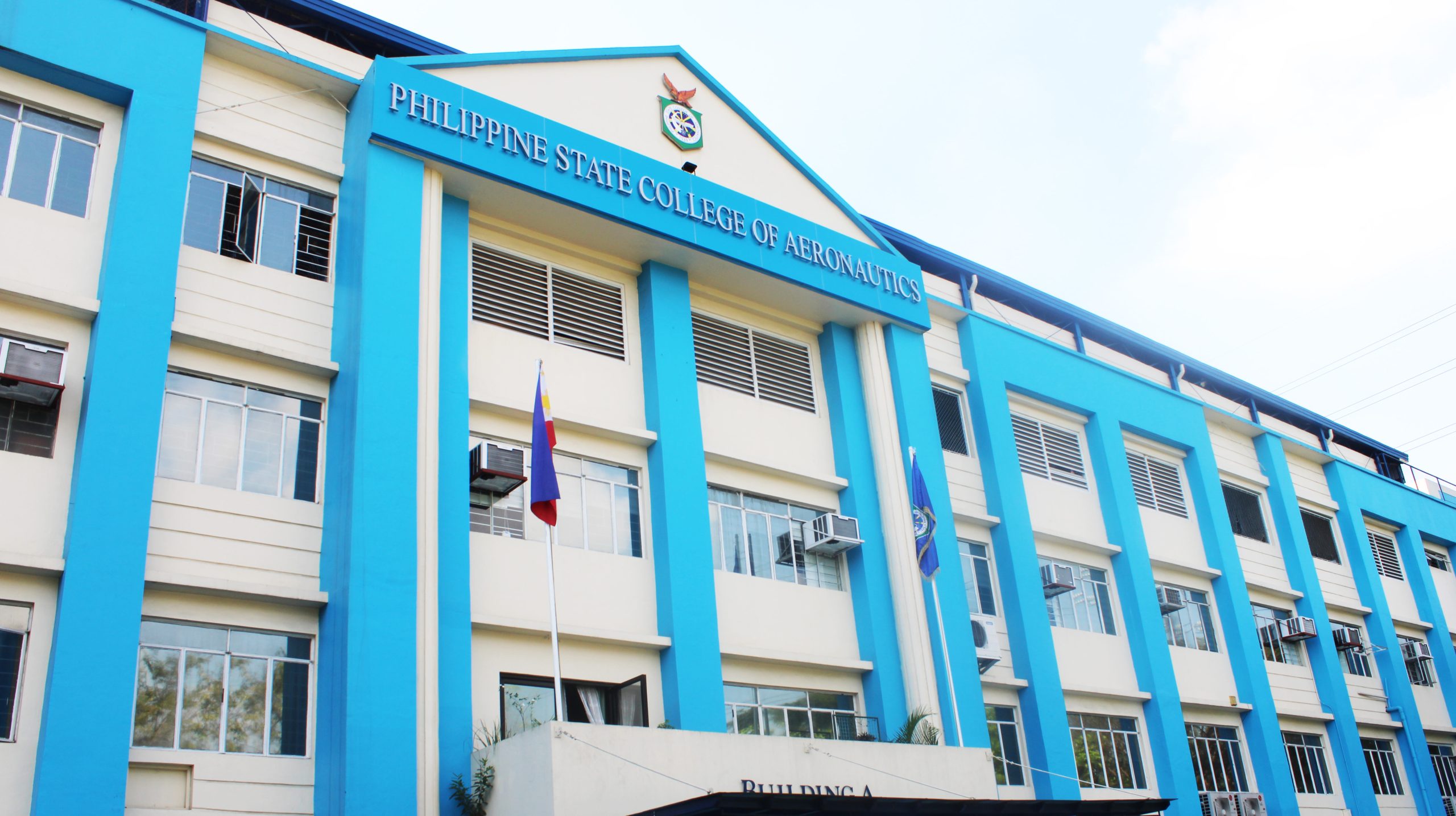
- Philippine State College of Aeronautics (June 3, 1992 - September 26, 2025)
- National Aviation Academy of the Philippines (September 27, 2025 - Present)
Campuses
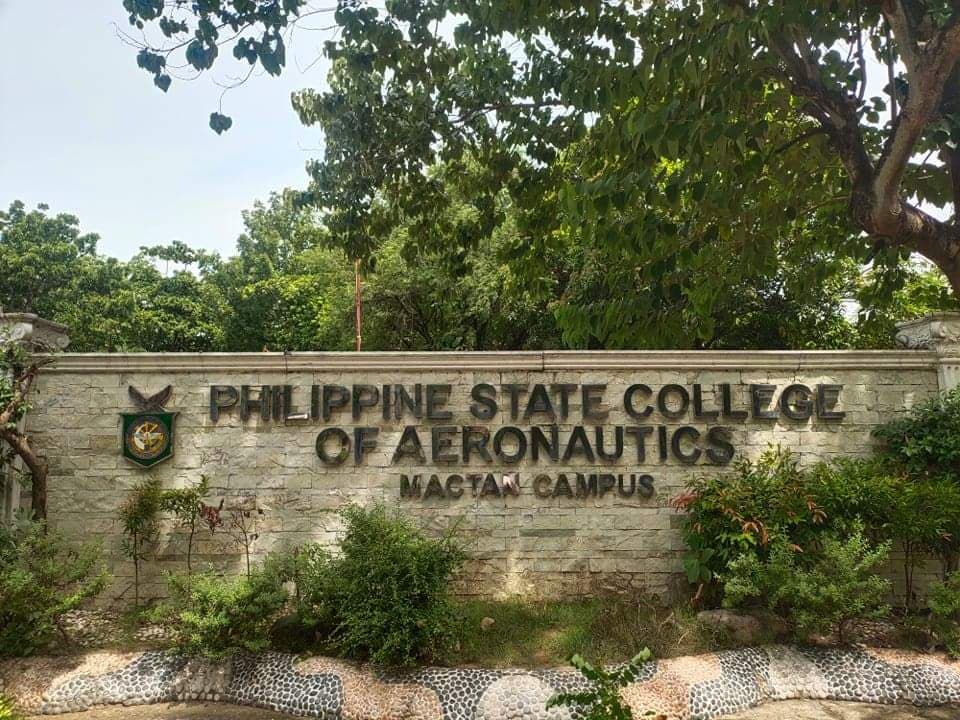
- PhilSCA - Villamor, Pasay City
- PhilSCA - FAB, Lipa-Batangas
- PhilSCA - BAB, Pampanga
- *With extension campus in Palmayo, Floridablanca
- MBEAB, Mactan-Cebu
- *With extension campus in Medellin, Cebu
- AFP Regulation G. 168-342 established the institution as Basa Air Base Community College on April 1, 1968. Approved by the Department of Education, Culture, and Sports (DECS) to operate on April 23, 1969.
- Presidential Decree No. 1078 – An Act Converting the Basa Air Base Community College (BABCC) into Philippine Air Force College of Aeronautics (PAFCA) was signed on 26 January 1977.
“AN ACT CONVERTING THE BASA AIR BASE COMMUNITY COLLEGE INTO THE PHILIPPINE AIR FORCE COLLEGE OF AERONAUTICS, PROVIDING FOR A CHARTER FOR THIS PURPOSE” - Republic Act No. 7605 – An Act Converting the Philippine Air Force College of Aeronautics (PAFCA) into a State College to be known as Philippine State College of Aeronautics (PhilSCA) was signed on 3 June 1992 (Charter Day).
“AN ACT CONVERTING THE PHILIPPINE AIR FORCE COLLEGE OF AERONAUTICS INTO A STATE COLLEGE TO BE KNOWN AS THE PHILIPPINE STATE COLLEGE OF AERONAUTICS AND FOR OTHER PURPOSES, AMENDING PRESIDENTIAL DECREE NUMBERED TEN HUNDRED AND SEVENTY-EIGHT ENTITLED, “CONVERTING THE BASA AIR BASE COMMUNITY COLLEGE INTO THE PHILIPPINE AIR FORCE COLLEGE OF AERONAUTICS, PROVIDING FOR A CHARTER FOR THIS PURPOSE” - Republic Act No. 12255 – An Act Converting the Philippine State College of Aeronautics to the National Professional Institution renaming it as the National Aviation Academy of the Philippines.
“AN ACT DECLARING THE PHILIPPINE STATE COLLEGE OF AERONAUTICS AS THE NATIONAL PROFESSIONAL INSTITUTION FOR AVIATION RENAMING IT THE NATIONAL AVIATION ACADEMY OF THE PHILIPPINES, AND APPROPRIATING FUND THEREFOR”
Ground Zero of NAAP’s First Flight
PhilSCA was established as Basa Air Base Community College (BABCC) on 1 April 1968 through AFP Regulation G.168-342 and was approved to operate by the Department of Education, Culture, and Sports on 23 April 1969 (Founding Anniversary). Then Captain Norberto Furagganan, a Judge Advocate of Basa Air Base, spearheaded the opening of collegiate classes in 1969.
The College was established in response to an urgent military concern affecting the 5th Fighter Wing, the premier jet fighter unit of the Philippine Air Force (PAF) stationed at Basa Air Base in Floridablanca, Pampanga. At the time, the nearest community offering secondary and tertiary education was the town of Guagua, Pampanga, located approximately 17 kilometers away and accessible only through rough and unsafe roads. Travel posed serious risks, as Basa Air Base was situated within an area known as Huklandia (NPA), with active insurgent presence.
As the only PAF unit operating jet fighter aircraft, the 5th Fighter Wing could not readily reassign its highly specialized personnel to other air bases without incurring substantial costs for retraining abroad. Requests for transfer and applications for discharge became frequent, driven by personnel seeking higher education unavailable in the immediate vicinity. Despite repeated appeals to the Department of Education, Culture and Sports (DECS), now the Department of Education (DepEd), and efforts to invite private institutions to establish a tertiary school near the base, these initiatives proved unsuccessful.
The local community mobilized its resources to substantially meet the initial requirements of the Bureau of Public Schools, leading to the establishment of community schools. Base authorities rehabilitated a dilapidated structure and converted it into temporary classrooms, while also making available other facilities, including training aids and instructional equipment, to support the schools’ early operations. BABCC was originally established with the approval of the Secretary of Education, Culture and Sports to cater to the educational needs of the military personnel of Basa Air Base, their dependents, and civilians residing in the surrounding communities has successfully brought into this rural area, college education at a minimal cost.
In 1977, President Ferdinand E. Marcos signed Presidential Decree No. 1078, converting the Basa Air Base Community College into the Philippine Air Force College of Aeronautics (PAFCA), with its main campus established at Villamor Air Base in Pasay City, Metro Manila. Although granted state college status, its charter did not provide for government subsidy, since the institution was classified as a non-profit, non-stock educational entity. In addition to the campuses at Villamor and Basa Air Bases, satellite campuses were subsequently established at Sangley Air Base, Fernando Air Base, and Mactan Air Base.
During this period, PAF authorities envisioned the establishment of a Philippine Air Force Academy to address challenges in the procurement and training of officer pilots, through the integration of the Philippine Air Force Flying School and the Philippine Air Force Regular Officer Procurement Program. This vision was later institutionalized when President Corazon C. Aquino signed Republic Act No. 7605, converting the Philippine Air Force College of Aeronautics (PAFCA) into the Philippine State College of Aeronautics (PhilSCA). In 1994, the Board of Trustees approved the establishment of the institution’s own flight school to provide training for private and commercial pilot programs.
PhilSCA acquired its first trainer plane in 1997 — a Tampico STB9-C aircraft (RP 2200) which Senator Raul Roco donated from his country-wide development fund, and another Tampico STB9-C aircraft (RP 2204) was purchased for P10 Million from PhilSCA Development Fund on June 3, 1992.
In 2010, PhilSCA was relocated from Manlunas St. in Villamor Air Base, Pasay City (now Newport City) to Piccio Garden, Villamor, Pasay City.
From a Community College to the National Institution
On March 01, 2021, the PhilSCA Academic and Non-Academic Officials signed A Proposal to Reclassify the Philippine State College of Aeronautics as a Professional Aviation Education Institution in full support of the foregoing endeavor during the culmination of the Crafting of the PhilSCA Strategic Plan 2023-2028 at Bayleaf Hotel, General Trias, Cavite, Philippines. Representative Ron P. Salo, who was sitting as a member of PhilSCA Board of Trustees, introduced House Bill No. 7323, An Act Declaring the Philippine State College of Aeronautics as the National Professional Institution for Aviation, To be Known as the National Aviation Academy of the Philippines, and Appropriating Funds Thereof, during the First Regular Session of the 19th Congress on February 29, 2023. The PhilSCA Board of Trustees approved Resolution No. 485, Series of 2023 strongly endorsing to the House Committee on Higher and Technical Education House Bill No. 7323 on 19 May 2023. House Bill No. 10403 was approved (Reps Salo, Go (M), Dalipe, Chatto, Suansing (M.A), Khonghun, et. al) on August 7, 2024.
In Senate on August 22, 2024, Senator Ramon Bong Revilla Jr. introduced Senate Bill No. 2801, An Act Declaring The Philippine State College Of Aeronautics As The National Professional Institution For Aviation, Renaming It As The National Aviation Academy Of The Philippines, And Appropriating Funds Therefor. The Committee on Higher, Technical, and Vocational Education joint with the Committees on Public Services; Ways and Means; and Finance, Joint Technical Working convened for a Group Meeting at the Senate of the Philippines wherein PhilSCA is invited to participate on November 26, 2024. Senator Win Gatchalian introduced Senate Bill No. 2912, An Act Declaring The Philippine State College Of Aeronautics As The National Professional Institution For Aviation, Renaming It As The National Aviation Academy Of The Philippines, Repealing For The Purpose Republic Act No. 7605, Entitled “An Act Converting The Philippine Air Force College Of Aeronautics Into A State College To Be Known As The Philippine State College Of Aeronautics And For Other Purposes, Amending Presidential Decree Numbered Ten Hundred And Seventy-Eight, Entitled, ‘Converting The Basa Air Base Community College Into The Philippine Air Force College Of Aeronautics, Providing For A Charter For This Purpose”’, And Appropriating Funds Therefor, on January 28, 2025. That same day, Committee Report No. 513 was submitted by the Committees on Higher, Technical and Vocational Education, Public Services, Ways and Means and Finance, Re: Senate Bill 2969. Recommending its approval in substitution of Senate Bill Nos, 2801 and 2912, taking into consideration House Bill No. 10403.
On June 4, 2025, the NAAP Bill was approved on Second Reading without Amendment. The Bill was approved on Third Reading with 22 Senators ‘In Favor,’ 0 Against, and 0 Abstention. Consequently, the NAAP Bill was sent to the House of Representatives requesting for concurrence on June 9, 2025. The House of Representatives adopted Senate Bill No. 2969 as an amendment to the House Bill No. 10403 on June 10, 2025. Enrolled copies of SBN-2969 and HBN-10403, were sent to the Office of the President for the signature of the President of the Philippines, His Excellency, President Ferdinand R. Marcos Jr. on August 6, 2025. The NAAP Bill was signed into law on September 5, 2025. It was published in the Official Gazette and Manila Time on September 11, 2025 and the law took effect on September 27, 2025.
Legal Mandate
“the STATE shall give priority to education to foster patriotism and nationalism, accelerate social progress, and promote total human liberation and development”
“the STATE shall protect and promote the right of all citizens to quality education at all levels and shall take appropriate steps to make such education accessible to all”
“The College shall provide professional and advanced technical and technological instruction and training in the preparatory field of aeronautics and the liberal arts courses.”